The 10-Minute Weekly Check That Keeps Your Plants Well Fed
 Suzy·Co-founder, NatureTech·Published Nov 2026·
6 min read
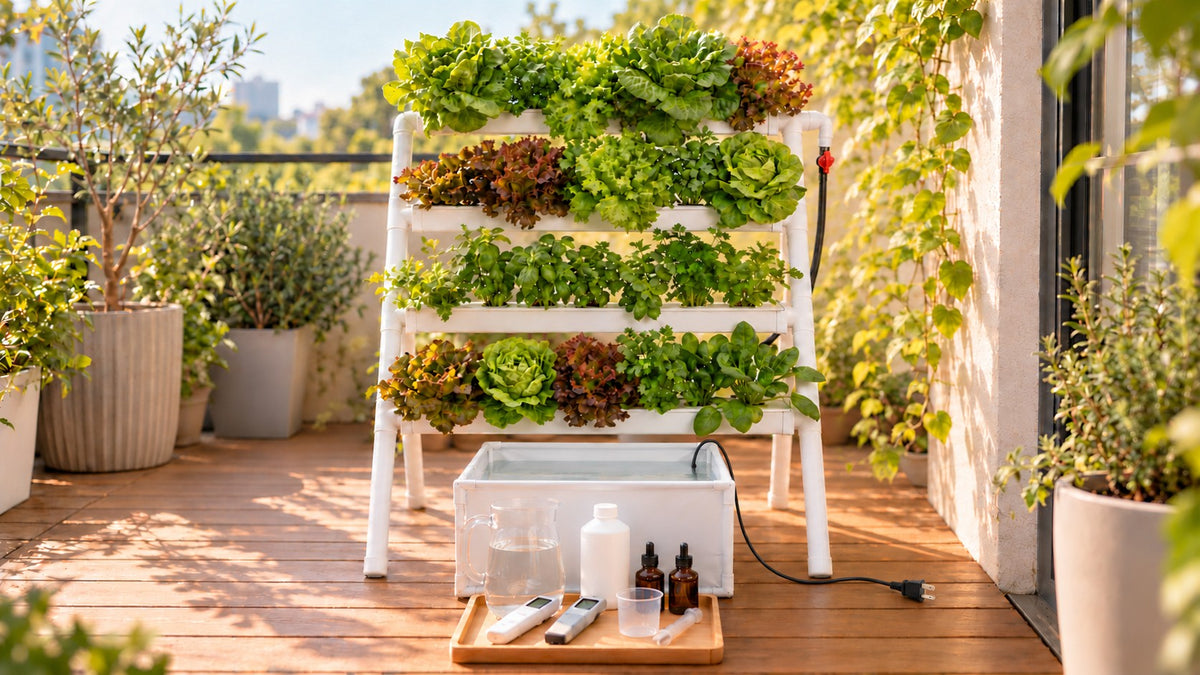
Once a week, top up the reservoir and bring the nutrient strength and the pH back into range. It takes about 10 minutes, and it keeps the water your plants live on balanced from one week to the next.
In a hydroponic system, the water in the reservoir is where your plants drink and where they get all of their food. Keeping that water balanced sounds technical, but it comes down to a short routine you repeat once a week.
In my years in hydroponics, from commercial growing to helping thousands of home growers, this is the habit I'd ask any new grower to learn first.
Why a weekly check matters
As part of the weekly care of the water in your system, you top up what the plants have used and bring the readings back into balance.
The first check is EC or PPM, depending on the meter you have. Put simply, it tells you how strong the nutrient solution is. If you're not sure your meter is reading true, here's how to calibrate an EC meter. The second check is pH, which tells you how acidic or alkaline the water is. Most hydroponic crops thrive with the pH between 5.5 and 6.5.


When to do it
Your reservoir will tell you. When the water level has dropped from what the plants drank and what evaporated, it's time. Make it a weekly habit, every 7 days.
What you'll need
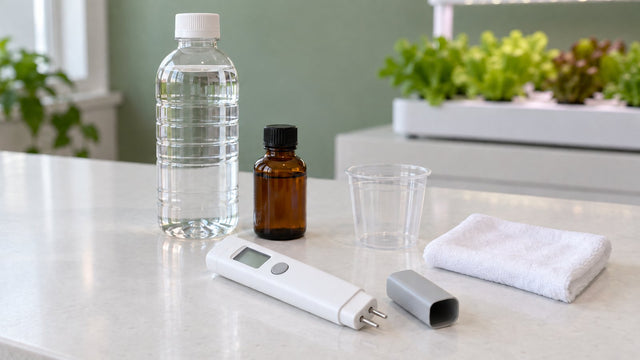
An EC or PPM meter, and a pH meter (I recommend a digital one, though a chemical test kit or test strips also work). Add pH Up, pH Down, fresh water, a measuring cup, a syringe for small doses, and hydroponic nutrients. Those must be made for hydroponics: regular garden fertilizer is not suitable.
How to do it
1. Top up the reservoir
Add fresh water to replace what was used up during the week. Stop when the water is about 2 inches (5 cm) from the top, or at the fill mark.

2. Measure the EC
Rinse the meter's probe with clean water, put it in the reservoir and wait for the reading to settle. Write the number down before you change anything.

3. Adjust the EC
Add a little hydroponic nutrient concentrate, stir gently and measure again. Repeat until you reach the recommended range. Give it a few minutes after each stir so the nutrients spread evenly before the next reading.

4. Measure the pH
Rinse the pH probe, put it in the reservoir water and wait for the reading to settle. You're aiming for 5.5 to 6.5.

5. Adjust the pH
If the pH is too high, add pH Down in 1 to 2 ml increments. If it's too low, add pH Up the same way. Stir gently, wait a few minutes and measure again before you add any more.

Questions I hear a lot
"The bottle doesn't tell me exactly how much nutrient to add. How much do I use?"
There's no single right dose. It depends on your starting reading, your target range, whether your nutrient is a one-part, two-part or three-part formula, and how concentrated that formula is. For a reservoir of about 10 gallons (40 L), a safe starting point is 1 to 2 ml. Mix well and wait a few minutes before you measure again. Dosing and checking like this keeps you in control, so you don't overshoot.
"Waiting between doses takes forever. How long do I really need?"
Full mixing takes around 15 minutes, but a few minutes is enough to get a reading close to the true value, as long as you've stirred well.
"Can't I just switch on the pump and let it do the mixing?"
Stir by hand instead. Fresh nutrient or pH adjuster needs to spread evenly before it reaches the roots. If a concentrated pocket flows through the pump straight to the roots, it can cause burn or stress in that spot. Stirring by hand also means you measure right there in the reservoir, instead of waiting for the pump to move the whole volume through the system.
"I'm not sure my tap water is good enough. Do I need a filter?"
Measure your tap water's EC before you add any nutrients. Most tap water falls between 0.1 and 0.9 mS/cm. Below 0.3, you're in good shape and can use it as is. Between 0.3 and 0.5, it's workable, especially for leafy greens and herbs, though you may need a little less nutrient so you don't overshoot your target. Above 0.5, a reverse osmosis (RO) filter is worth it. That water already carries minerals such as sodium, calcium and magnesium, which build up over time and push the nutrient ratios out of balance. RO matters even more for fruiting crops like tomatoes and peppers. If your tap water runs on the high side and you don't have a filter, your monthly full refresh of the reservoir becomes even more important.
"Do I really need gloves and eye protection for a 10-minute job?"
The real risk is in the concentrated bottles, before anything is diluted in the reservoir. pH Up is typically potassium hydroxide and pH Down is typically phosphoric acid, and both can irritate skin and seriously damage your eyes if they splash. So wear gloves and eye protection whenever you handle those bottles. Once the product is mixed into the reservoir, it's dilute enough that brief skin contact isn't a meaningful risk. With sensitive skin, keep the gloves on throughout, and always rinse your hands at the end. If pH Up or pH Down gets on your skin, rinse right away with plenty of running water. If it gets in your eyes, rinse with running water for at least 15 minutes and contact a medical professional.
Ten minutes that pay off all week
The first few times, this can feel like a lot of numbers. Before long it becomes a calm little ritual: water in, EC, pH, done. And once you know your system's usual numbers, you'll notice right away when one of them changes.
Here's to happy roots and a reservoir you can trust all week long.

Not sure what your plants need?
Vegardi knows your system, your crops, and your climate, then tells you exactly what to do and when.

Suzy is a co-founder of NatureTech and has been growing hydroponically for 18 years. She started out in commercial hydroponics, and over the years she has worked with thousands of home growers, one question at a time. Here she shares the practices that made the biggest difference for them, so anyone can grow some of their own food in the space and time they actually have.
Grow this next
Keep growing with us. It's free.
Join the Growers' Club for our best professional growing content, the kind we usually sell, plus first news, gifts and perks only members get.
We couldn't add you just now. Please try again.
One click to unsubscribe. We never share your address.
Almost there.
Check your inbox and confirm your email to join.
One quick question: what matters most to you in a hydroponic system?
We couldn't save that just now. Please try again, or skip.
SkipThank you.
One click in that email and you're in. While you wait:
Explore the Learn library → See the three systems →